

If you’ve recently searched for thejavasea.me leaks aio-tlp370, you’re probably trying to understand what the term actually means, whether the leaked content is legitimate, and if visiting related websites could put your privacy or devices at risk. That’s a smart question because leak-related keywords often spread quickly online, mixing facts with speculation.
This guide explains everything currently known about thejavasea.me leaks aio-tlp370, how leak websites generally operate, the security risks involved, legal and ethical considerations, and the safest ways to protect your personal information. Rather than encouraging access to leaked material, this article focuses on helping readers understand the topic responsibly and make informed decisions.
Key Takeaways
- thejavasea.me leaks aio-tlp370 is commonly discussed in online communities as a leak-related topic.
- Publicly available information about the specific aio-tlp370 designation remains limited and difficult to independently verify.
- Leak websites may expose users to malware, phishing, scams, or privacy risks.
- Downloading or sharing leaked material can create legal and ethical issues.
- Practicing strong cybersecurity habits helps reduce your exposure to online threats.
What Is TheJavaSea.me Leaks AIO-TLP370?
The phrase thejavasea.me leaks aio-tlp370 refers to online discussions surrounding alleged leaked digital content associated with a website known for publishing or indexing leaked files.
The “AIO” portion commonly stands for “All-In-One,” suggesting that the collection may contain multiple types of files or resources bundled together. However, the exact meaning of TLP370 has not been officially documented through trustworthy public sources.
Because of this lack of verification, many discussions surrounding thejavasea.me leaks aio-tlp370 rely on forum posts, social media conversations, and community speculation rather than confirmed facts.
That uncertainty makes it especially important to approach any claims carefully.
Why Has TheJavaSea.me Leaks AIO-TLP370 Become Popular?
Several factors explain why thejavasea.me leaks aio-tlp370 has attracted attention online.
Curiosity
People naturally become curious whenever they hear about leaked databases, software collections, or exclusive digital content.
Social Media Amplification
Posts mentioning thejavasea.me leaks aio-tlp370 can spread rapidly across platforms, often without verification. Once a keyword begins trending, search interest increases dramatically.
Cybersecurity Interest
Security researchers sometimes monitor leak-related websites to understand emerging threats, exposed credentials, or compromised systems.
SEO Visibility
Many websites publish articles targeting thejavasea.me leaks aio-tlp370 simply because people are searching for it. Not all of those articles provide accurate information.
Understanding Leak Websites
To better understand thejavasea.me leaks aio-tlp370, it helps to know how leak websites generally function.
Many leak-related platforms act as repositories or directories for unauthorized digital material. Depending on the site, content may include:
- Software packages
- Databases
- Documents
- Credentials
- Source code
- Digital media
- Archived files
Some sites directly host files, while others simply link to third-party storage services.
Not every claim made by these platforms is accurate. Some advertised leaks are fake, incomplete, outdated, or deliberately designed to attract visitors.
Is TheJavaSea.me Leaks AIO-TLP370 Legitimate?
This is one of the most common questions surrounding thejavasea.me leaks aio-tlp370.
The short answer is that there is no broadly verified public evidence confirming exactly what aio-tlp370 contains.
When evaluating leak claims, consider these factors:
- Has an independent cybersecurity organization verified the data?
- Are reputable technology publications reporting the same findings?
- Is there credible evidence supporting the claims?
- Could the files be fabricated or altered?
Without independent verification, it’s wise to remain skeptical.
Potential Risks of Accessing TheJavaSea.me Leaks AIO-TLP370
Searching for thejavasea.me leaks aio-tlp370 may seem harmless, but accessing unknown leak sites can expose users to several risks.
Malware
One of the biggest dangers is downloading malicious files disguised as leaked content.
Examples include:
- Trojans
- Ransomware
- Remote access tools
- Spyware
- Cryptocurrency miners
These programs may install silently after opening a downloaded file.
Phishing Attacks
Some websites encourage visitors to:
- Create accounts
- Enter email addresses
- Provide passwords
- Verify identities
These requests can be part of phishing campaigns designed to steal personal information.
Fake Downloads
Not every advertised leak actually exists.
Some websites use fake download buttons that redirect users to:
- Scam surveys
- Advertising networks
- Browser hijackers
- Suspicious installers
Identity Theft
Users who reuse passwords across multiple accounts face greater risks if compromised credentials appear in leaked databases.
Legal and Ethical Considerations
Another reason people search thejavasea.me leaks aio-tlp370 is to understand whether accessing leaked material is legal.
The answer depends on several factors, including:
- Local laws
- Copyright regulations
- Data ownership
- How the material was obtained
Even if something appears publicly accessible, that does not automatically make downloading or sharing it legal.
There is also an ethical dimension. Leaked information often contains private data belonging to individuals or organizations that never consented to its publication.
Respecting privacy helps create a safer digital environment for everyone.
How Cybersecurity Professionals Evaluate Leak Claims
Security experts rarely accept leak claims at face value.
Instead, they follow a structured process.
Verify the Source
Researchers determine where the information originated.
Analyze Metadata
File timestamps, hashes, and structures can reveal whether data appears authentic.
Compare with Known Incidents
If a company has previously disclosed a breach, analysts compare the alleged leaked data with verified information.
Look for Independent Confirmation
Responsible researchers seek multiple trustworthy sources before drawing conclusions.
This cautious approach is especially relevant when discussing thejavasea.me leaks aio-tlp370, since verified technical documentation remains limited.
How to Protect Yourself Online
Whether or not you’re specifically researching thejavasea.me leaks aio-tlp370, these cybersecurity practices can significantly improve your online safety.
Use Unique Passwords
Never reuse passwords across multiple websites.
Password managers make this much easier.
Enable Multi-Factor Authentication
MFA adds another layer of protection even if your password becomes compromised.
Keep Software Updated
Install updates for:
- Windows
- macOS
- Android
- iPhone
- Browsers
- Antivirus software
Security patches often fix vulnerabilities actively exploited by attackers.
Avoid Suspicious Downloads
If a file’s origin cannot be verified, don’t download it.
Monitor Your Accounts
Watch for:
- Unknown logins
- Password reset emails
- Unexpected purchases
- New devices
Early detection can limit potential damage.
Common Myths About TheJavaSea.me Leaks AIO-TLP370
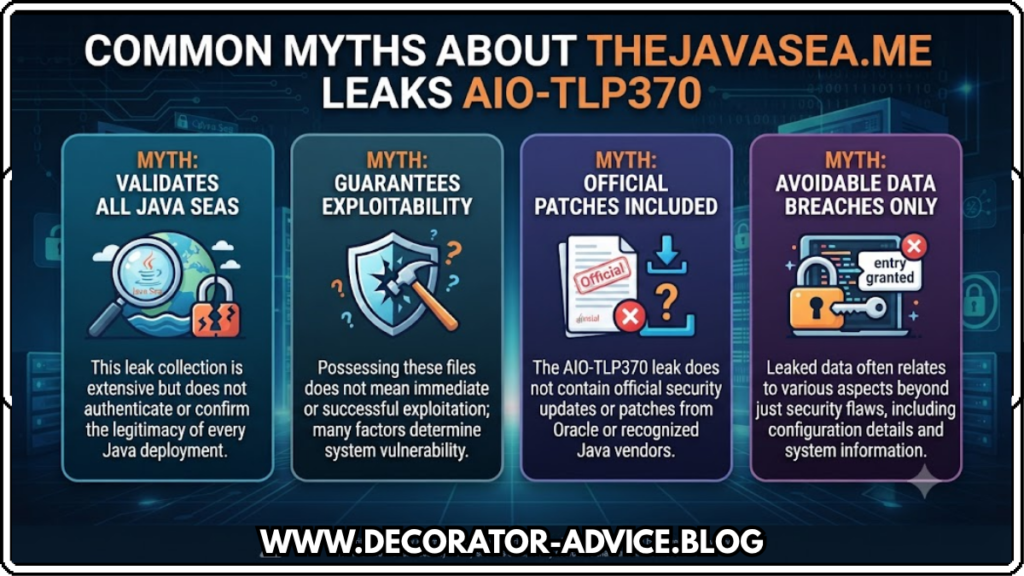
Myth: Every Leak Is Real
False.
Many leak claims are fabricated to generate traffic.
Myth: Viewing a Leak Is Completely Safe
Not necessarily.
Some websites distribute malicious advertisements or exploit browser vulnerabilities.
Myth: Antivirus Stops Every Threat
No security software catches every attack.
Safe browsing habits remain essential.
Myth: Only Large Companies Are Affected
Small businesses and individual users also experience credential theft and data breaches.
Myth: Anonymous Browsing Eliminates Risk
Privacy tools may reduce tracking, but they cannot prevent malware infections or unsafe downloads.
Why Search Interest Continues to Grow
Searches for thejavasea.me leaks aio-tlp370 continue because internet users are increasingly interested in:
- Data breaches
- Cybersecurity news
- Digital privacy
- Software collections
- Online investigations
As cyber incidents become more common, curiosity about leak-related topics naturally increases.
Unfortunately, that curiosity also attracts scammers who capitalize on trending search terms.
Best Practices Before Visiting Any Leak-Related Website
If you’re researching cybersecurity topics, follow these precautions:
- Never download unknown files.
- Use updated antivirus protection.
- Verify information from trusted cybersecurity sources.
- Avoid entering passwords on unfamiliar websites.
- Use separate research accounts when appropriate.
- Back up important files regularly.
- Enable account alerts for unusual activity.
These habits help reduce risk regardless of whether you’re researching thejavasea.me leaks aio-tlp370 or any other trending cybersecurity topic.
Final Thoughts on TheJavaSea.me Leaks AIO-TLP370
The growing interest in thejavasea.me leaks aio-tlp370 reflects broader public curiosity about online leaks, cybersecurity, and digital privacy. While the phrase appears frequently in online discussions, independently verified information about the specific aio-tlp370 designation remains limited. That makes it important to separate confirmed facts from speculation.
Rather than chasing unverified downloads, focus on understanding the broader security implications. Practicing strong password hygiene, enabling multi-factor authentication, keeping devices updated, and avoiding suspicious websites will do far more to protect you than investigating questionable leak repositories. In today’s digital world, informed skepticism is one of your strongest security tools.
FAQ 1: What is thejavasea.me leaks aio-tlp370?
It is a search term associated with alleged leaked digital content. Publicly verified information about the specific aio-tlp370 label is limited, so many online claims remain unconfirmed.
FAQ 2: Is thejavasea.me leaks aio-tlp370 safe to access?
No, you should be cautious. Leak-related websites can expose visitors to malware, phishing attempts, scams, or deceptive downloads.
FAQ 3: Does thejavasea.me leaks aio-tlp370 contain verified leaked data?
There is no widely confirmed public verification. Without independent validation, treat claims about its contents with skepticism.
FAQ 4: Can visiting leak websites infect my computer?
Yes, it can. Malicious advertisements, fake downloads, and infected files are common risks on untrusted websites.
FAQ 5: How can I protect myself from data leak risks?
Use strong cybersecurity practices. Create unique passwords, enable multi-factor authentication, keep software updated, and avoid downloading files from unknown sources.
Read More Blogs